What is Medical Coding? A Complete Beginner’s Guide
Introduction
Medical coding is one of the fastest-growing careers in the healthcare industry. It plays a crucial role in converting medical services, diagnoses, and procedures into standardized codes that are used for billing, insurance claims, and healthcare data management. Medical coding professionals help ensure that healthcare providers receive accurate payments while maintaining proper documentation and compliance.
What is Medical Coding?
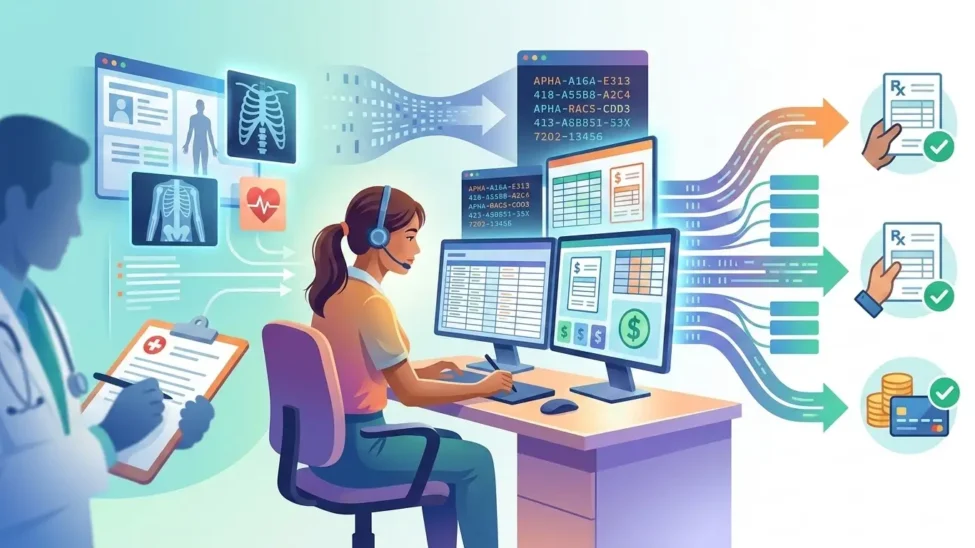
Medical coding is the process of translating healthcare diagnoses, procedures, medical services, and equipment into standardized alphanumeric codes. These codes are derived from medical records such as physician notes, laboratory reports, and treatment documentation.
Medical coders carefully review patient records and assign the correct codes according to international coding systems. These codes are then used by hospitals, clinics, and insurance companies to process claims and maintain healthcare data.
Common Coding Systems Used in Medical Coding
ICD-10-CM (International Classification of Diseases)
ICD-10-CM codes are used to identify diseases, health conditions, and diagnoses recorded in patient medical records.
CPT (Current Procedural Terminology)
CPT codes are used to describe medical procedures and services performed by healthcare providers.
HCPCS (Healthcare Common Procedure Coding System)
HCPCS codes are used for medical supplies, equipment, and additional healthcare services not covered by CPT codes.
Role of a Medical Coder
Medical coders play an important role in the healthcare system. Their main responsibilities include:
Reviewing patient medical records and clinical documentation
Assigning accurate diagnosis and procedure codes
Ensuring compliance with healthcare coding guidelines
Supporting medical billing and insurance claim processes
Maintaining confidentiality and accuracy of healthcare data
Skills Required for Medical Coding
To become a successful medical coder, professionals need the following skills:
Knowledge of medical terminology
Understanding of anatomy and physiology
Strong attention to detail
Analytical and problem-solving skills
Knowledge of healthcare documentation
Familiarity with coding systems like ICD-10 and CPT
Career Opportunities in Medical Coding
Medical coding offers excellent career opportunities in the healthcare sector. After completing medical coding training, professionals can work in:
Hospitals
Healthcare organizations
Insurance companies
Revenue Cycle Management (RCM) companies
Medical billing companies
Healthcare consulting firms
Common job roles include Medical Coder, Coding Specialist, Coding Auditor, Clinical Documentation Specialist, and Healthcare Data Analyst.
Benefits of a Career in Medical Coding
High demand in the healthcare industry
Opportunities to work in India and abroad
Stable and growing career field
Competitive salary packages
Opportunities for professional certification and career advancement
Conclusion
Medical coding is an essential part of the healthcare system that ensures accurate documentation, proper billing, and efficient healthcare management. With the increasing demand for healthcare services, the need for skilled medical coding professionals continues to grow. For students and healthcare graduates, medical coding offers a promising and rewarding career path in the healthcare industry.
Prev Post Career Opportunities in Medical Coding